Therapy Services
Discover Samyaan’s personalized child development therapies designed to support your child’s unique journey.
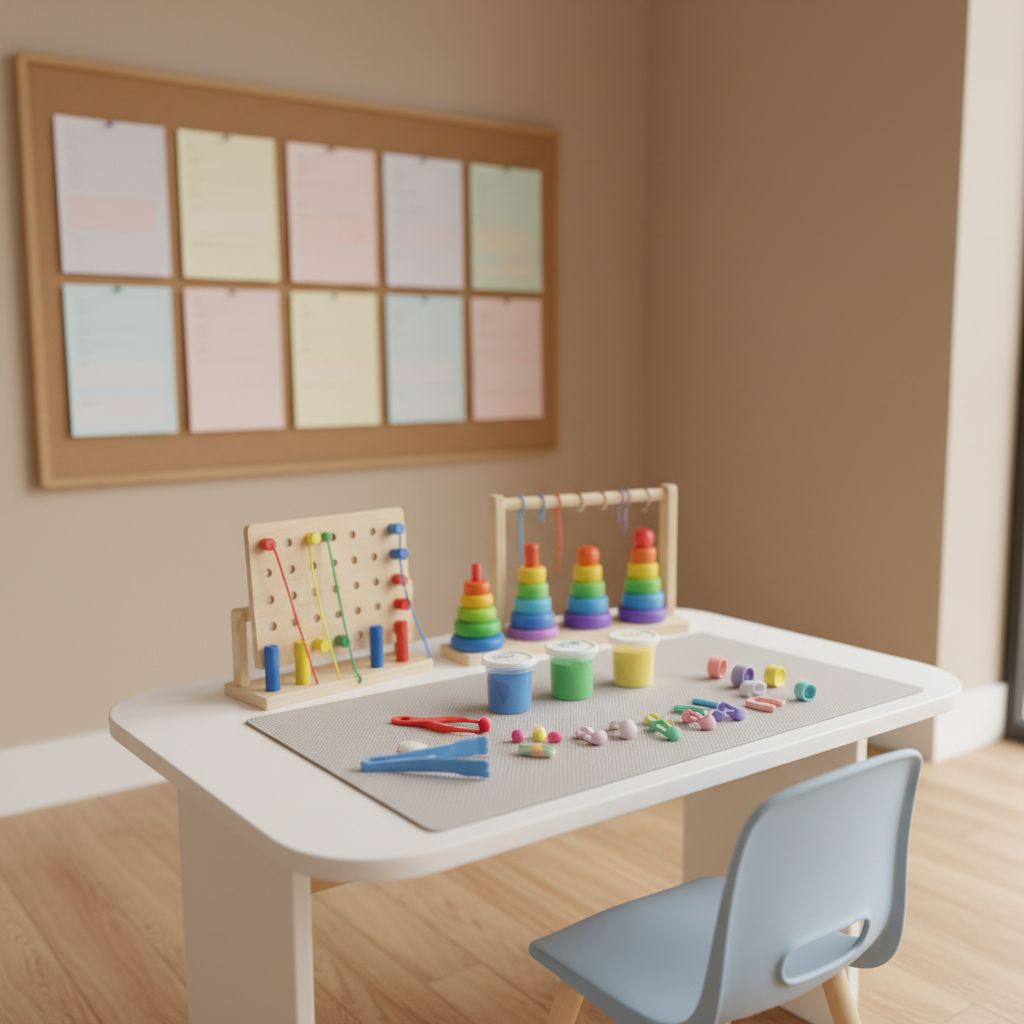
Behavioral therapies are among the most widely researched and effective approaches for supporting individuals on the autism spectrum. Rather than focusing on “curing” autism, modern behavioral therapies focus on teaching practical skills, improving communication, fostering independence, and reducing distress or unsafe behaviors.
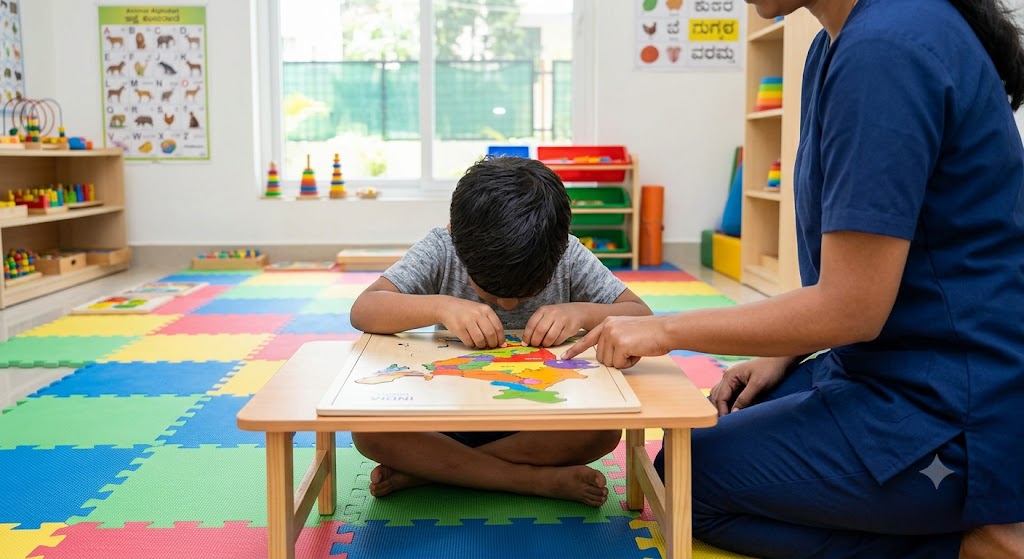
Core Focus Areas
When applied to Autism Spectrum Disorder (ASD), behavioral approaches typically target:
- Communication & Language: Developing spoken language, functional sign language, or alternative communication tools (like PECS or AAC devices).
- Social Skills: Learning turn-taking, understanding non-verbal cues, making friends, and participating in peer activities.
- Life & Adaptive Skills: Mastering daily activities like toilet training, dressing, feeding, hygiene, and safety awareness.
- Reducing Challenging Behaviors: Identifying the causes behind behaviors such as self-injury, extreme aggression, or severe meltdowns, and replacing them with adaptive coping mechanisms.
Early Intervention
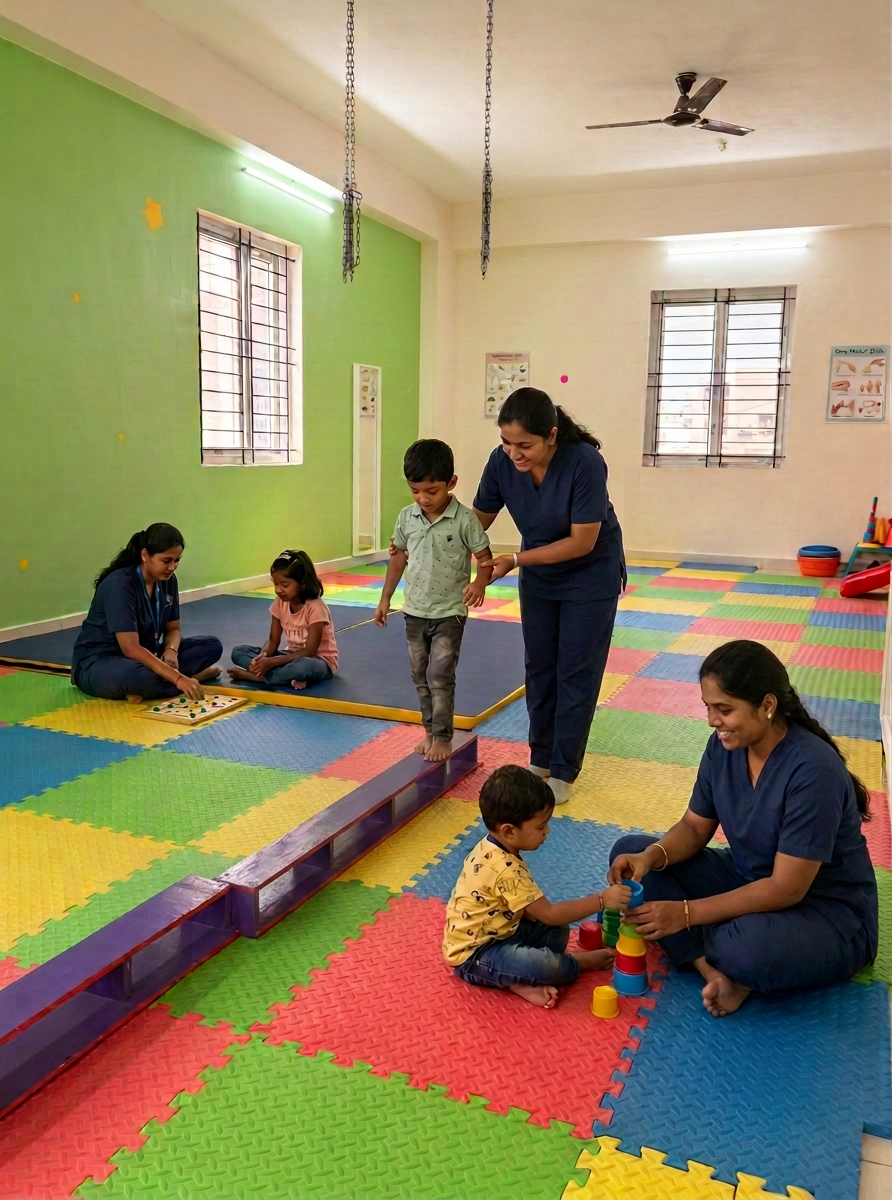
From Early Intervention and Autism Support to School Readiness, handwriting, feeding, and sensory programs, each service is clearly explained so you can quickly see how it matches your child’s age, abilities, and goals.
Early Intervention for individuals refers to specialized therapies, support, and services provided to young children—typically from birth through age 3 to 5—during the critical early years of brain development.
Because a young child’s brain is highly adaptable (a property known as neuroplasticity), intervening early can make a profound impact on their long-term developmental, communication, and social trajectory.

Key Goals of Early Intervention
- Build Communication Skills: Promoting foundational pre-verbal skills (eye contact, joint attention, gesturing) and functional language (words, signs, or communication devices).
- Support Daily Living & Adaptive Skills: Assisting with fundamental self-care milestones like eating, sleeping, dressing, and toilet training.
- Enhance Social & Emotional Growth: Helping children learn how to interact with peers, share attention, regulate emotions, and understand social cues through structured play.
- Empower Parents & Caregivers: Training family members to integrate therapeutic techniques into everyday routines at home, making learning continuous and natural
Why Early Timing Matters
- Capitalizing on Neuroplasticity: The early years are when neural pathways are most flexible, making it easier to learn core skills and adapt to sensory or communicative challenges.
- Preventing Secondary Frustration: Giving children functional ways to express their needs early on reduces the frustration that often leads to severe meltdowns or unsafe behaviors.
- Long-Term Independence: Studies consistently show that children who receive timely early intervention often require fewer intensive supports as they enter formal school environments.
Occupational Therapy
Occupational Therapy (OT) helps children develop the foundational skills they need to play, learn, and navigate daily life with confidence and independence. For a child, their “occupations” are the everyday activities that allow them to explore the world—such as playing, writing, dressing, eating, and interacting with others.
When physical, sensory, or cognitive challenges get in the way of these daily tasks, Occupational Therapy offers structured, play-based strategies to help children build strength, coordination, and self-regulation.
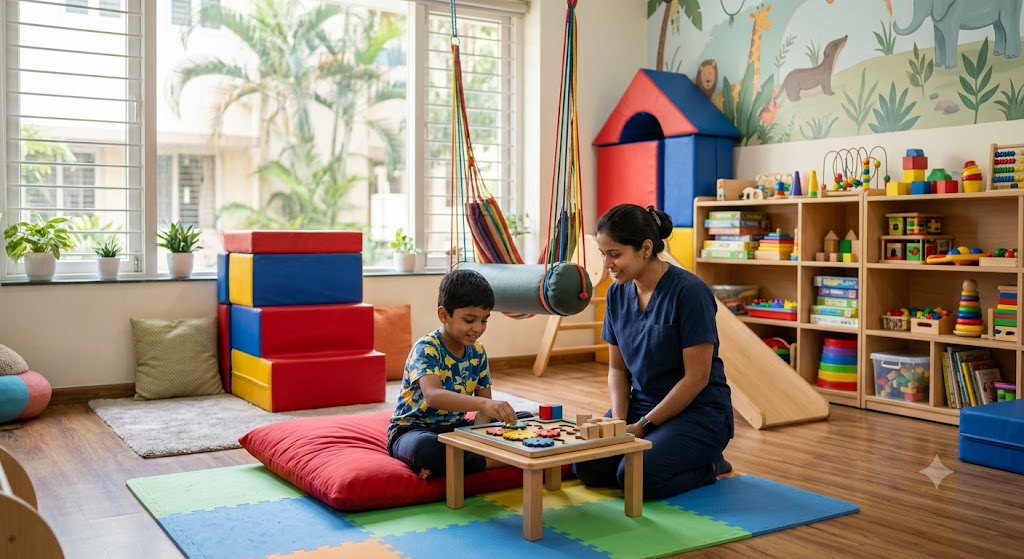
Core Areas Addressed in Pediatric OT
- Sensory Integration & Processing: Helping children process and organize sensory input (light, sound, touch, movement) so they feel calm, focused, and comfortable in different environments.
- Fine Motor Skills: Strengthening hands and fingers for tasks like gripping a pencil, using scissors, buttoning clothes, and managing utensils.
- Gross Motor Coordination & Balance: Improving body awareness, bilateral coordination (using both sides of the body together), and spatial judgment during play.
- Visual-Motor Integration & Handwriting: Developing hand-eye coordination required for copying shapes, staying within lines, and comfortable, legible handwriting.
- Self-Regulation & Executive Functioning: Teaching strategies to manage attention, transitions, frustration, and organizational tasks.
- Daily Living Skills (Self-Care): Building independence in routine activities such as feeding, grooming, dressing, and toilet training.
How Occupational Therapy Helps
Through individualized, goal-oriented sessions, OT transforms challenges into achievable milestones. By disguising therapeutic exercises as engaging play, therapists help children build confidence, overcome sensory overload, and develop the functional life skills needed for home, school, and social settings.
Oral Placement Therapy
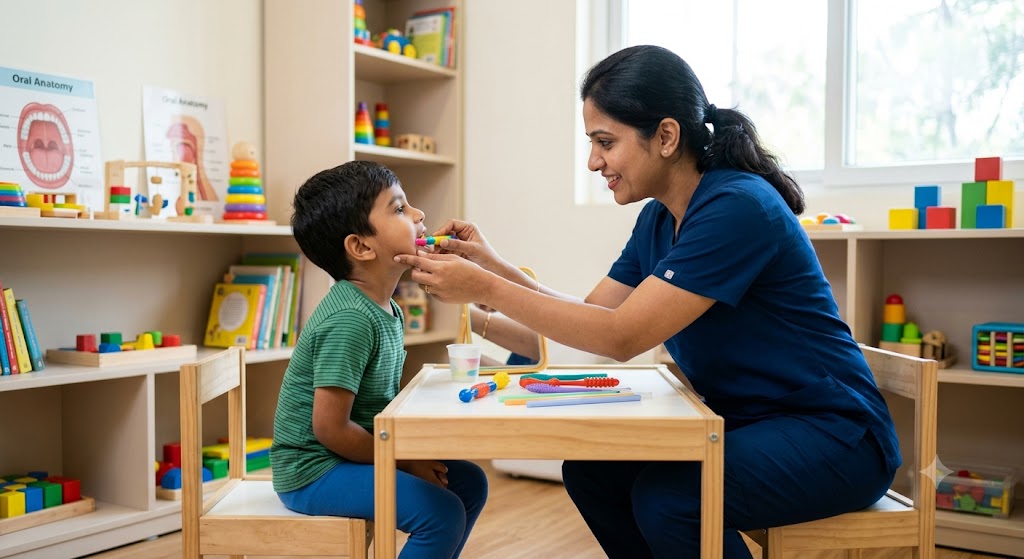
Oral Placement Therapy (OPT) is a specialized, tactile-proprioceptive speech therapy approach used to improve muscle tone, strength, and motor control in the lips, tongue, jaw, and cheeks.
While traditional speech therapy relies heavily on visual and auditory cues (listening and looking at a therapist’s mouth), OPT adds tactile (touch) and movement cues using specialized therapy tools like therapy straws, horns, chewy tools, and bubble blowers. This hands-on approach helps children physically feel and master the correct oral movements needed for clear speech and safe, efficient feeding.
Who Can Benefit from OPT?
Oral Placement Therapy is particularly effective for children who struggle with oral-motor control due to:
- Speech Sound Disorders & Apraxia: Difficulty making specific speech sounds or coordinating complex mouth movements.
- Low Oral Muscle Tone (Hypotonia): Weakness in the jaw, lips, or tongue that affects clarity or feeding.
- Feeding & Swallowing Challenges: Difficulty chewing, keeping food in the mouth, or transitioning from liquids to solid foods.
- Persistent Mouth Breathing or Drooling: Weak lip closure or low jaw stability making it difficult to keep the mouth closed comfortably.
- Down Syndrome, Cerebral Palsy, or Developmental Delays: Conditions that often impact muscle tone and oral-motor coordination.
Key Goals & Benefits
- Enhance Jaw Stability & Muscle Tone: Building a strong, steady foundation in the jaw so the lips and tongue can move independently for speech and chewing.
- Improve Speech Sound Clarity: Training precise tongue placement and lip rounding necessary for producing clear consonant and vowel sounds.
- Develop Safe & Effective Feeding Skills: Improving biting, chewing, swallowing, and drinking through a straw or cup.
- Promote Lip Closure & Nasal Breathing: Supporting healthy resting oral posture, which helps reduce drooling and promotes nasal breathing.
How It Works
OPT is integrated into a child’s overall speech and language treatment plan. Using fun, step-by-step exercises with targeted motor tools, therapy sessions feel like play while systematically building muscle memory. As muscle strength and motor control improve, the therapist transitions these newly learned physical movements directly into functional speech sounds, words, and mealtime habits
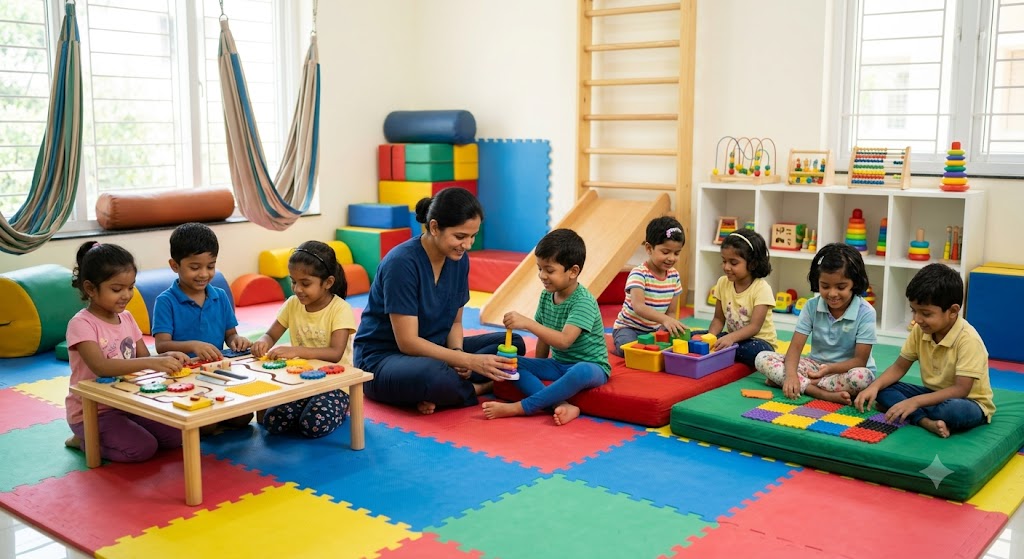
Group Therapy provides children and adolescents with a safe, supportive, and structured environment to build essential life skills alongside their peers. Guided by experienced therapists, group sessions offer a unique opportunity for children to practice real-world interactions, foster meaningful friendships, and learn that they are not alone in their challenges.
While individual therapy focuses on target skills one-on-one, Group Therapy bridges the gap between therapy sessions and everyday social environments like classrooms, playgrounds, and family gatherings.
Core Focus Areas
Our specialized therapy groups focus on a variety of developmental and social-emotional goals, including:
- Social Skills & Communication: Practicing conversational turn-taking, active listening, reading non-verbal social cues, and sharing or cooperating during group activities.
- Emotional Regulation & Coping: Learning to identify emotions, manage frustration, navigate transitions, and handle anxiety or sensory overload in a peer setting.
- Problem-Solving & Conflict Resolution: Developing flexible thinking, learning how to compromise, and resolving peer disagreements constructively.
- Self-Confidence & Belonging: Building self-esteem, fostering empathy, and creating a supportive community where every child feels accepted and valued.
Who Can Benefit from Group Therapy?
Group Therapy is beneficial for children who experience:
- Difficulty making or keeping friends
- Challenges with sharing, taking turns, or group participation
- Social anxiety or shyness in group settings
- Attention-Deficit/Hyperactivity Disorder (ADHD) or Autism Spectrum Disorder (ASD)
- Difficulty managing big emotions or impulsivity around peers
How It Works
Children are carefully matched into small, cohesive groups based on their age, developmental level, and personal therapy goals. Sessions combine structured activities—such as cooperative games, guided discussions, creative projects, and role-playing—with opportunities for natural social interaction. This dynamic environment allows children to try out new skills in real-time, receiving immediate guidance from therapists and positive reinforcement from peers.
Feeding Therapy
Feeding Therapy helps children build a positive, stress-free relationship with food while developing the physical motor skills and sensory comfort needed to eat safely and independently.
Eating is one of the most complex tasks a child learns—it requires coordination across sensory systems, oral muscle strength, and emotional comfort. When mealtimes become a daily battle of tantrums, coughing, gagging, or extreme selectivity, Feeding Therapy provides structured, gentle strategies to turn mealtime into an enjoyable experience for the whole family.

Who Can Benefit from Feeding Therapy?
Feeding Therapy supports children who experience challenges such as:
- Extreme Picky Eating: Accepting fewer than 15–20 foods, or refusing entire food groups (e.g., vegetables, meats, or textures).
- Sensory Sensitivities: Aversion to specific textures, temperatures, colors, or smells, often leading to gagging or distress.
- Oral-Motor Weakness: Difficulty chewing, moving food with the tongue, swallowing, or frequent pocketing of food in the cheeks.
- Trouble Transitioning Foods: Difficulty moving from breast/bottle to purees, or purees to solid table foods.
- Mealtime Stress & Anxiety: Crying, throwing food, or refusing to sit at the table during meals.
- Weight or Growth Concerns: Slow weight gain due to restricted intake or physical eating difficulties.
Key Goals & Benefits
- Expand Food Selection: Gradually introducing new colors, textures, and food types in a playful, low-pressure environment.
- Strengthen Oral-Motor Skills: Building the jaw, tongue, and cheek strength needed to chew, manipulate, and swallow food safely.
- Reduce Sensory Aversions: Helping children feel comfortable touching, smelling, tasting, and swallowing different textures.
- Promote Mealtime Peace: Transforming mealtime into a calm, positive experience for both the child and parents.
How It Works
Feeding therapy sessions combine evidence-based approaches (such as sensory-based exploration and behavioral reinforcement) with fun, interactive play. Children are encouraged to explore new foods step-by-step—starting from simply tolerating the food’s presence, to touching, smelling, licking, and eventually tasting and swallowing it. Therapists also partner closely with parents, providing practical home strategies to maintain progress at the family dinner table.
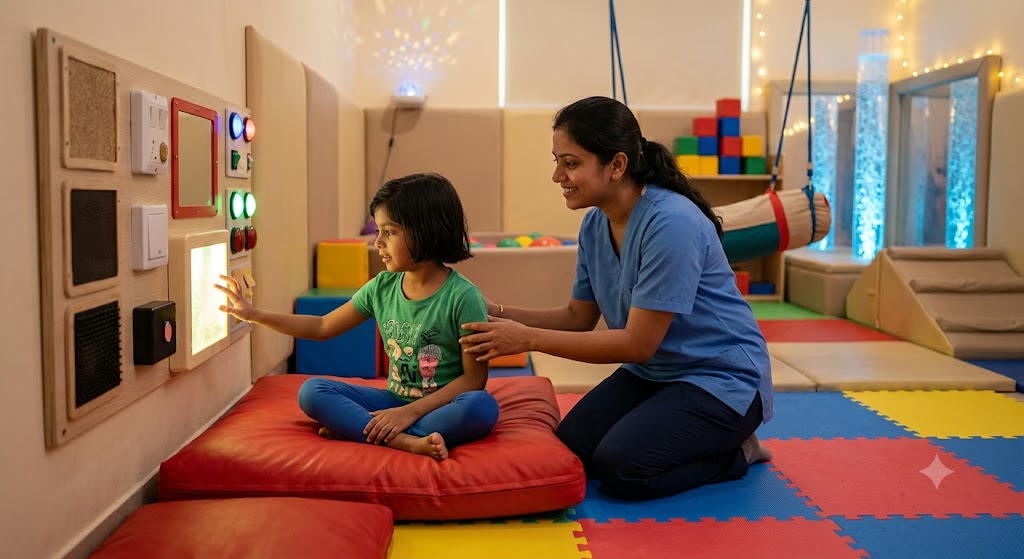
Sensory Integration Therapy helps children process, organize, and respond appropriately to the sensory information they receive from their environment and their own bodies.
Our brains constantly take in information through sight, sound, touch, taste, and smell—as well as movement (vestibular) and body awareness (proprioceptive). For some children, the brain struggles to organize this sensory input efficiently. This can make everyday experiences feel overwhelming, distressing, or unusually seeking, often leading to behavioral challenges, anxiety, or difficulty focusing.
Who Can Benefit from Sensory Integration Therapy?
Sensory Integration Therapy supports children who experience sensory processing differences, including those with Autism Spectrum Disorder (ASD), ADHD, or Sensory Processing Disorder (SPD). Common signs include:
- Over-Responsiveness (Sensory Sensitivity): Extreme discomfort with loud noises, bright lights, specific clothing textures, or being touched unexpectedly; fear of movement (swings, slides).
- Under-Responsiveness (Sensory Seeking): Constantly crashing into furniture, spinning, jumping, craving intense movement, or having a high tolerance for pain.
- Difficulty with Self-Regulation: Frequent meltdowns, emotional outbursts, or difficulty calming down after becoming upset or overstimulated.
- Motor Planning & Coordination Challenges: Appearing clumsy, bumping into objects, or struggling with tasks requiring physical coordination (e.g., catching a ball, jumping).
Key Goals & Benefits
- Improved Self-Regulation: Helping children stay calm, focused, and emotionally balanced in different settings (home, classroom, community).
- Enhanced Body Awareness & Balance: Building confidence in motor skills, posture, spatial awareness, and physical coordination.
- Reduced Sensory Overload: Teaching the brain to process sensory triggers with less anxiety or distress.
- Greater Independence: Supporting daily routines such as dressing, bathing, haircutting, and attending busy social gatherings.
How It Works
Sensory Integration Therapy takes place in a specialized, gym-style environment filled with equipment like swings, trampolines, ball pits, climbing walls, and tactile materials. Guided by trained Occupational Therapists, sessions are disguised as fun, purposeful play. Therapists design a tailored “sensory diet”—a structured sequence of movement and sensory activities—that challenges the child’s nervous system in a safe, supportive way, helping them learn to organize sensory input naturally.
Academic & Educational Support
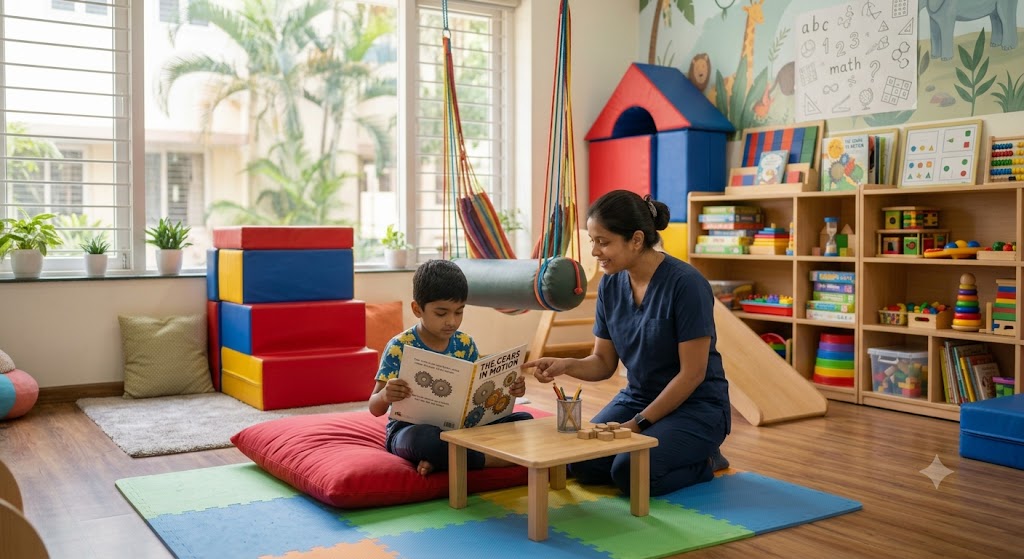
Academic Support helps children and teens overcome learning hurdles, regain their confidence, and discover their true learning potential. When a student struggles in school, it is rarely due to a lack of effort or intelligence; more often, underlying challenges with executive functioning, attention, sensory processing, or specific learning differences make traditional classroom learning difficult.
Our multidisciplinary team addresses the root causes of academic frustration, helping students develop the tools, strategies, and resilience needed to succeed in school and beyond.
Areas We Address
We support students facing a wide range of learning and academic challenges, including:
- Executive Functioning Deficits: Difficulty with organization, time management, planning, starting assignments, or keeping track of belongings.
- Specific Learning Differences: Challenges related to Dyslexia (reading/spelling), Dysgraphia (writing/fine motor coordination), and Dyscalculia (math skills).
- Attention & Focus Challenges: Struggling to stay on task, follow multi-step instructions, or control impulsivity in the classroom (common in ADHD).
- Handwriting & Motor Fatigue: Difficulty with letter formation, pencil grip, spacing, or physical hand fatigue during written tasks.
- Processing Speed & Working Memory: Difficulty taking in information quickly, recalling instructions, or completing tests within time limits.
- School-Related Anxiety & Frustration: Low self-esteem, avoidance of homework, or emotional meltdowns related to schoolwork.
Key Goals & Benefits
- Tailored Learning Strategies: Equipping students with individualized study techniques, graphic organizers, and memory tools adapted to their unique learning styles.
- Improved Organization & Autonomy: Teaching practical systems for tracking assignments, managing homework time, and completing tasks independently.
- Enhanced Fine Motor & Written Expression: Building hand strength, typing skills, or handwriting speed to make schoolwork less exhausting.
- Boosted Academic Confidence: Transforming feeling “stuck” or “behind” into a feeling of capability and accomplishment.
Neurodevelopmental Therapy
NDT focuses on analyzing postural control and movement patterns. By utilizing gentle, direct physical guidance (handling techniques), certified NDT therapists help children inhibit abnormal movement reflexes, facilitate normal alignment, and build functional movement patterns necessary for sitting, standing, walking, and daily independence.

Who Can Benefit from NDT?
Neuro-Developmental Therapy is tailored for infants and children, with congenital or acquired neurological conditions, including:
- Cerebral Palsy (CP) (all functional levels and movement types)
- Traumatic Brain Injury (TBI) or Spinal Cord Injury
- Genetic Disorders & Syndromes (e.g., Down Syndrome, Rett Syndrome)
- Developmental Delay & Hypotonia (low muscle tone)
- Hypertonia & Spasticity (high muscle stiffness or involuntary tightness)
- Post-Neurological Surgery Rehabilitation (e.g., post-SDR or orthopedic corrections)
Key Goals & Benefits
- Improve Postural Control & Balance: Establishing core stability so children can safely sit, stand, and navigate their surroundings.
- Normalize Muscle Tone & Alignment: Reducing abnormal muscle tightness or supporting weak muscles to prevent joint deformities and contractures.
- Enhance Functional Independence: Helping children learn or regain functional motor skills such as reaching, grasping, crawling, standing, and walking.
- Promote Symmetry & Coordination: Facilitating smoother, more efficient movement patterns on both sides of the body.
- Support Daily Activities: Translating movement gains directly into daily self-care tasks, such as eating, dressing, and active play.
How It Works
NDT is an individualized, task-oriented therapy. Rather than relying on static exercises or machinery, a certified NDT therapist uses precise hands-on positioning and weight-shifting cues during functional tasks and play.
Each session is dynamic and adapts to how the child’s nervous system responds in real-time. By providing the exact amount of physical support needed, therapists enable children to experience active, correct movement-helping the brain establish stronger, more functional neural connections.
How We Support Your Child
We take a holistic approach to academic success. Through comprehensive assessments and individualized intervention plans, our therapists work directly with your child to target specific developmental or cognitive gaps. We also partner closely with parents and collaborate with teachers to advocate for appropriate classroom accommodations (such as extended time, sensory breaks, or assistive technologies) to ensure your child feels supported in every environment.
Our Handwriting Program is a specialized, therapist-led service designed to help children with Autism Spectrum Disorder (ASD), Sensory Processing Differences, ADHD, and other developmental delays overcome the physical, sensory, and cognitive barriers to written communication.
Writing is a complex, multi-system task. It requires strong core and shoulder stability, precise hand-eye coordination, fine motor strength, visual-spatial perception, and executive functioning skills to translate thoughts onto paper. When a child experiences underlying motor or sensory challenges, handwriting can quickly become a source of frustration, physical fatigue, and school-related stress.
Our program addresses the root causes of writing difficulties, moving beyond basic repetition to build the foundational skills needed for comfortable, legible, and fluent handwriting.

Specialized Support for ASD & Developmental Needs
Children with ASD and other neurodivergent profiles often face unique handwriting obstacles that standard classroom instruction does not address:
- Fine Motor & Pencil Grip Challenges: Low hand tone, hypermobile joints, or weak grip strength leading to poor pencil control or hand pain.
- Sensory Processing & Pressure Regulation: Difficulty gauging how much pressure to apply—resulting in faint, barely visible lines or pressing so hard that paper tears and pencils break.
- Visual-Spatial & Perceptual Delays: Difficulty with letter formation, spatial spacing between words, staying within lines, or left-to-right orientation.
- Postural Instability: Weak core or shoulder strength, leading to slouching, resting the head on the desk, or early physical fatigue while writing.
- Executive Functioning & Planning: Difficulty planning letter strokes, sequencing thoughts, or maintaining focus during written assignments.
Key Program Goals & Benefits
- Promote Functional Pencil Grip: Developing an efficient, ergonomic grip to reduce hand strain, joint pressure, and physical fatigue.
- Enhance Letter Formation & Legibility: Teaching clear, consistent stroke sequences for upper- and lower-case letters.
- Improve Spatial & Visual Alignment: Mastering sizing, line placement, margin awareness, and proper word spacing.
- Build Postural Stability & Endurance: Strengthening core, shoulder, and wrist stability to support sustained deskwork.
- Reduce Writing Frustration: Transforming written work from an exhausting chore into a confident tool for self-expression.
How Our Program Works
Led by experienced Occupational Therapists, our program utilizes evidence-based curricula (such as Handwriting Without Tears®) adapted specifically for neurodivergent learners.
Sessions incorporate multi-sensory strategies—using tactile materials like clay, shaving cream, textured boards, visual stroke guides, and movement-based exercises—to make learning hands-on and engaging. We also evaluate the need for assistive adaptations (such as specialized pencil grips, slanted writing surfaces, or adaptive paper) and collaborate with parents and teachers to support handwriting success at home and in the classroom.
Therapeutic Listening Program
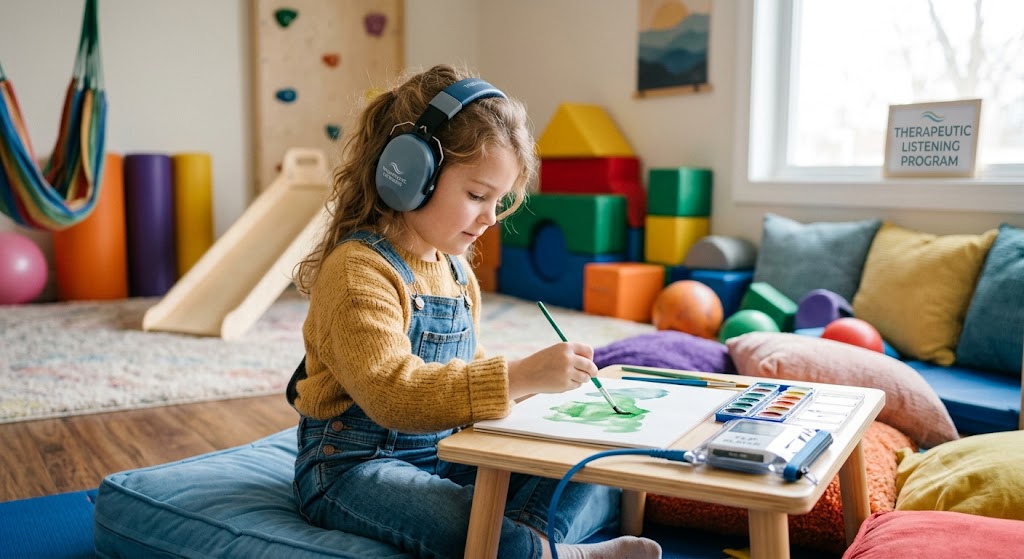
Therapeutic Listening® is an evidence-based, sound-based intervention designed to support children who struggle with sensory processing, attention, emotional regulation, and motor coordination.
Since the auditory system is deeply connected to parts of the brain that control arousal, movement, balance, and emotion, sound can be a powerful tool for neuro-development. Therapeutic Listening uses specially altered music, processed through high-fidelity, specialized headphones to stimulate the nervous system, helping the brain better organize and process sensory information from the surrounding world.
How It Works
Unlike passive listening, Therapeutic Listening utilizes music that has been electronically altered (filtered, gated, and spatially adjusted) to target specific frequency ranges.
When listened to through specialized headphones, these acoustic cues activate the auditory-vestibular network, the system responsible for processing sound, spatial orientation, movement, and posture. By “exercising” the brain through sound, the program promotes neural integration, helping the body and mind achieve a calm, alert state ready for learning and social interaction.
Who Can Benefit from Therapeutic Listening?
Therapeutic Listening is integrated into therapy for infants and children with:
- Sensory Processing Differences (SPD) & Autism Spectrum Disorder (ASD)
- Attention-Deficit/Hyperactivity Disorder (ADHD)
- Auditory Processing & Communication Delays
- Emotional Dysregulation, Anxiety, or Frequent Meltdowns
- Postural Insecurity & Motor Coordination Challenges
- Sleep Distortions or Transition Difficulties
Key Benefits & Outcomes
- Improved Self-Regulation: Helps soothe an overactive nervous system, reducing anxiety, sensory overload, and emotional outbursts.
- Enhanced Focus & Attention: Promotes sustained attention and readiness to learn in home, school, and therapy settings.
- Better Posture & Balance: Supports core stability, bilateral coordination, and spatial awareness through vestibular stimulation.
- Refined Social Engagement: Encourages eye contact, active listening, and vocal communication by tuning the brain to human voice frequencies.
- Smoother Daily Transitions: Helps children adapt more comfortably to changes in routine, bedtime, or busy environments.
School Readiness Program
Building Confidence, Independence, and Classroom Success
Starting school—whether entering preschool, kindergarten, or foundation years—is one of the most exciting milestones in a child’s life. However, true “school readiness” goes far beyond knowing the alphabet or counting to ten. It is about equipping children with the foundational physical, social, emotional, and cognitive skills needed to navigate a structured classroom environment with confidence and joy.
Our School Readiness Program is designed by pediatric developmental experts to bridge the gap between early childhood and classroom expectations. Through play-based, evidence-driven interventions, we help children build the physical stamina, self-regulation, and independence required to thrive on day one.
Key Focus Areas
1. Fine Motor & Pre-Writing Skills
Classroom tasks demand strong hand muscles and precise motor control. We focus on:
- Functional Pencil Grip & Drawing: Developing finger strength and control for effortless drawing and early writing.
- Scissor & Tool Skills: Mastering cutting, pasting, and using classroom tools safely.
- Visual-Motor Integration: Coordinating eyes and hands for copying shapes, staying within lines, and completing puzzles.
2. Self-Regulation & Attention
A busy school day requires children to focus, sit still, and adapt to changing routines. We help children:
- Sustain Focus: Build attention span for table work and group activities.
- Emotional Regulation: Learn strategies to manage frustration, cope with unexpected changes, and calm themselves in noisy spaces.
- Sensory Processing: Manage sensory stimulation (like loud bells, bright lights, or group settings) so they remain calm and attentive.
3. Self-Care & Everyday Independence
Fostering independence reduces classroom anxiety and builds self-esteem. We practice essential daily tasks:
- Mealtime Independence: Opening lunchboxes, snack wrappers, and water bottles independently.
- Personal Management: Dressing, managing school uniforms, zipping backpacks, and handling bathroom routines confidently.
4. Social Competence & Communication
Interacting with peers and teachers is central to school life. Our small-group activities help children:
- Follow Instructions: Practice multi-step directions and transition smoothly between tasks.
- Peer Play: Learn turn-taking, sharing, active listening, and initiating friendships.
- Express Needs: Develop clear communication skills to ask for help when needed.
5. Postural Strength & Gross Motor Skills
Sitting upright at a desk requires strong core muscles and stability. We target:
- Core Strength & Posture: Building endurance to sit comfortably during floor/circle time and desk activities.
- Coordination & Spatial Awareness: Improving balance, playground confidence, and safe movement through busy hallways.
Who Can Benefit from This Program?
Our program is ideal for children preparing to start preschool or primary school who may need extra support with:
- Difficulty sitting still or focusing on structured tasks.
- Frustration with fine motor activities like coloring, using scissors, or holding a pencil.
- Dependency on caregivers for basic tasks like opening food packaging or dressing.
- Shyness, rigidity, or difficulty joining in group play and making friends.
- Sensitivity to loud sounds, bright lights, or crowded environments.
- Challenges with following two- or three-step instructions.
Our Approach
We believe learning happens best through engaging, play-based experiences. Our program is delivered by qualified pediatric therapists who tailor every activity to match your child’s unique strengths and needs. By creating a supportive, positive environment, we ensure children leave each session feeling proud, capable, and ready for school.
Sessions with lesser duration
✓ 2-3 sessions
✓ Weekly
Growth Plan
Ongoing therapy is usually planned as weekly blocks with a standard session duration
✓ 3-4 sessions weekly
✓ Home program
✓ Parent training
✓ Progress reviews
✓ Basic therapy mix
Intensive Plan
More intensive, multidisciplinary programs—such as early intervention, school readiness, or combined OT and communication support—are typically structured
✓ 5-6 sessions weekly
✓ Multidisciplinary
✓ School liaison
✓ Detailed reports
✓ Advanced therapy mix
✓ Care coordination
✓ Review meetings


